
Post #297
1400 words; 5 minutes to read
By: Harpreet Ahuja is a lawyer, human rights consultant, and social justice advocate. Her work explores the intersection of law, policy, and lived experience—and tells the human stories behind injustice. Harpreet is based in Vancouver, and publishes on her website.
Her work previously appeared in the blog in 2025 here.
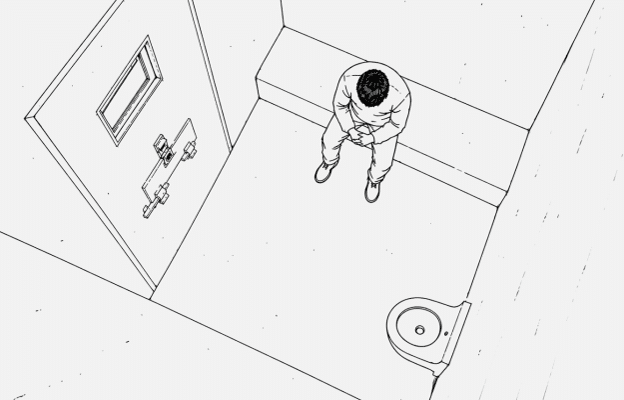
For two years, 2021-2023, I served as an external independent decision-maker for BC provincial correctional facilities. I decided if a prisoner was guilty of breaking a rule, and I handed down the penalty. My job was to maintain institutional safety and rehabilitate behaviour. The reality is, it didn’t work.
The reality of prison hearings
The failure wasn’t due to a lack of structure. The ten prisons where I worked all had the same 28 rules governing prisoner conduct. The most common violations involved possession of contraband (which can include a homemade shank or prison brew) and threatening or assaulting staff or other prisoners. When it was time for their hearing, prisoners were handcuffed and escorted to a small room by one or two guards, depending on the risk classification level. Inside, an officer sat at a desk, tasked with presenting the institution’s case. Behind a raised bench, the adjudicator appeared on a screen presiding over the room virtually as part of COVID-19 protocols. And trapped in the middle stood the prisoner—often shoulder-to-shoulder with the very guard who accused them. The atmosphere in the room was often one of “I gotcha.”
Of the 892 prisoners whose cases I heard, only 31 (3%) had legal representation. Most prisoners were self-represented, unable find or to afford a lawyer. The average prisoner had a seventh-grade education; many struggled to read, and some were illiterate. Though I was tasked with verifying the validity of each guilty plea, few ever tried to challenge the institution’s evidence. Most walked into the room knowing they had already lost, even if they hadn’t committed the violation or had been put up to it—the risk of retaliation from an officer or a “heavy” (a high-level gang member) for not taking the fall simply wasn’t worth it. Spending more time in “the hole” had become their safer, better option.
When prisoners were charged after an incident and awaiting their hearings, the institutions most often placed them in the hole—administrative segregation—making release from isolation their primary goal. When asked whether they would like to share their side of the story, many offered the same response: “No, I just want to get this over with.” Before they even reached me, the institution had battered them down by turning the key and walking away.
Inside “the hole”
Putting a prisoner in segregation—the hole—meant confinement for 22 hours or more a day without meaningful human contact for up to 15 days. I understood it was inhumane, and that long periods amounted to torture, yet it was widely condoned and expected. Prison culture equated segregation with justice served. Bound by the law, I had six penalties available to me, none of which addressed the cause of the prisoners’ behaviour, restored trust, or allowed forgiveness. While I could issue warnings, restrict programs, impose extra duties (such as cleaning), limit their time out on the range, or forfeit earned remission (effectively extending their sentences), the main punishment was time in segregation. I faced a revolving door of the most vulnerable prisoners, the ones staff labeled “frequent flyers.”
Before me stood individuals with criminal records as long as their lists of mental health diagnoses– Attention Deficit Hyperactivity Disorder (ADHD), Post-Traumatic Stress Disorder (PTSD), anxiety, depression, schizophrenia, and Fetal Alcohol Spectrum Disorder (FASD). Sexual abuse and childhood trauma were all too common. Many were intergenerational survivors of the Residential School system, or of foster care , surviving violence and neglect. Putting them in segregation exacerbated the behaviour the prison was trying to prevent. It made prisoners worse.
Us vs. them
Every time I sent a prisoner to the hole, I knew I wasn’t making the prison safer. I was perpetuating their trauma. After spending time in isolation, the prisoner would return to their range disoriented, worn down, and unwell. They were met with the same problems: heightened animosity and the need to look over their shoulder. It was only a matter of time before a violent incident or a near-fatal overdose led to the same penalty—a vicious cycle that plagued all ten institutions.
It was difficult to convince institutions that prisoners were deserving of dignity and respect—that hurt people hurt people, and that what they did (if they did it) wasn’t necessarily who they were. It was equally difficult to convince prisoners that the guards weren’t “out to get them. ”The guards suffered from high stress, burnout, and PTSD. Facing high turnover, institutions prioritized staff morale by protecting their own even when they were in the wrong. This further increased division and distrust between the keepers and the kept.
A moment of connection
Take the case of Mr. Henry (not his real nmae). He is what prison staff call a “frequent flyer,” having become institutionalized after being in and out of the system since he was 12 years old. As far back as he could remember, nobody loved or cared about him; all he had known was a life of abuse and homelessness. He carried a long history of criminal activity. In this instance, he owed a street debt and was before me for doing someone’s dirty work (though he would never admit it for fear of being labeled a “snitch”).
Mr. Henry was reluctant to speak to me at first, but as we talked, he began to open up, visibly taken aback that I was asking questions about him, listening, and empathizing. The guard mentioned knowing Mr. Henry for years, adding that he had a reputation as a talented artist, a claim supported by the impressive drawings the guard had seen. Toward the end of the hearing, it was clear that Mr. Henry found a sense of calmness and satisfaction from drawing. Seeing an opportunity, I interpreted the extra duties penalty broadly and assigned him to complete a drawing as a form of accountability.
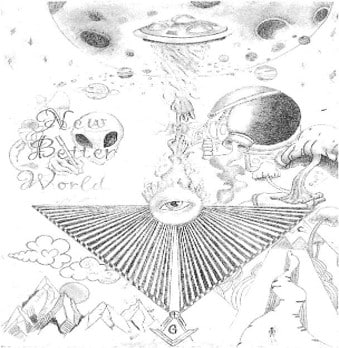
The drawing represents a creative, human-centered approach to discipline, one that aligns with the spirit of Gladue principles, which require us to consider context, trauma, and alternatives to punishment for Indigenous people in conflict with the law.
He had walked into that room expecting to be sent back to the hole. Instead, by recognizing his humanity and encouraging an interest he was passionate about, he left with something to feel proud of—a shift that completely changed his attitude. He walked in cold and angry, and walked out a little lighter.
Breaking the cycle
The extra duties provision was the only sanction I could interpret expansively, one that allowed me to impose positive, productive penalties aligned with rehabilitation. But I was limited in how frequently I could apply it. The institution viewed the provision as “a slap on the wrist” and labeled me biased in favour of prisoners, revealing a system where attempts at rehabilitation were disregarded as weakness.
Nobody can heal alone in a dark box. We desperately need a system where penalties build skills, restore trust, and mandate mental health support. I found that when prisoners were acknowledged for their positive actions and contributions, they felt valued and, in turn, treated others with that same respect.
Every person sent to the hole eventually comes back out—to the range, and ultimately, to our communities. When we choose isolation, we aren’t making prisons safer; instead, we are attempting to reintegrate traumatized people into society more broken than when they entered. Only by transforming how discipline is enforced can we begin to change institutional culture.
Explore the Terms: To better understand the institutional terms used in this story, you can explore my Beyond the Bars Prison Glossary.
About this blog: The John Howard Canada blog is intended to support greater public understanding of criminal justice issues. Blog content does not necessarily represent the views of John Howard Canada. All blog material may be reproduced freely for any non-profit purpose as long as the source is acknowledged. We welcome comments (moderated).
Winner of 2025 Clawbies award for law blogs.
Back
Comments are closed here.